
If you’re setting up lighting for your own videos, you’ve probably narrowed it down to two popular options and wondered which one to buy. This guide breaks down ring light vs softbox in plain terms: how each one works, what it looks like on camera and which one fits the kind of video you actually make, from quick Reels and Zoom calls to polished brand content.
What a ring light does
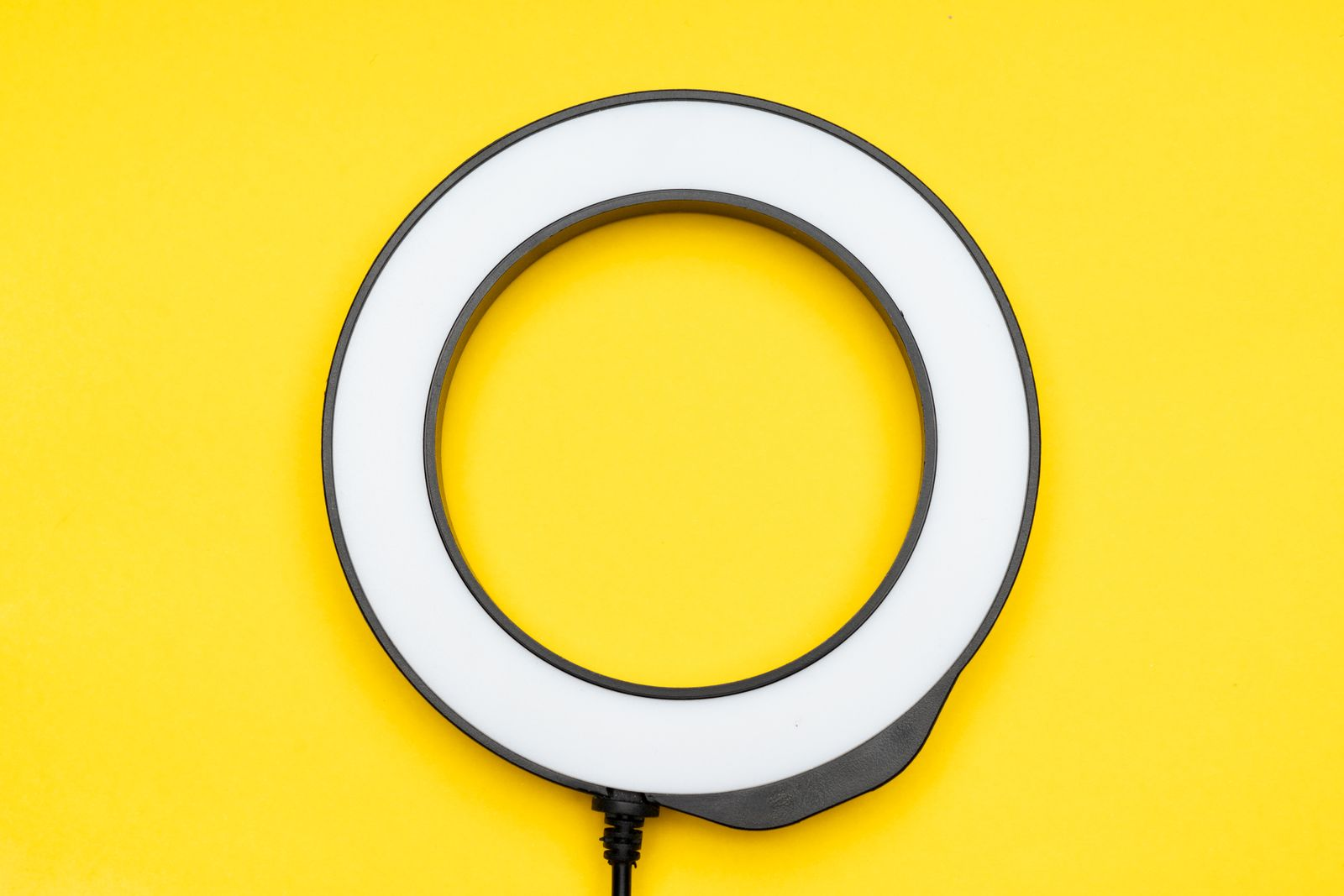
A ring light is a circle of LEDs with an open center. You put your phone or camera in (or just behind) the middle, so the light hits your face from almost the same direction the lens sees you. That straight-on light fills in shadows under the eyes and nose and gives skin a smooth, even look. It also creates the round “ring” reflection in the eyes that many beauty and social creators like.
Ring lights are usually compact, quick to set up and often come with a phone holder, which is why they’re so common for selfie-style videos, tutorials and video calls.
What a softbox does
A softbox is a light inside a fabric box with a white diffusion panel on the front. The panel spreads the light over a bigger surface, and a bigger light source relative to your subject makes softer, more gradual shadows. Softboxes are usually placed off to one side of the camera, which gives your face a bit of shape: one side slightly brighter than the other, the way light from a window looks.
That’s why softboxes are a standard tool on professional sets. They’re used for interviews, talking-head videos, product shots and anything meant to feel more cinematic than a selfie.
Ring light vs softbox: the key differences
The look on camera
A ring light gives a flat, bright, even look with very few shadows. It’s flattering and simple, but it can make a face look a little two-dimensional. A softbox gives softer, more natural light with gentle shadows that add depth. If you want your video to feel like a commercial or a short film, a softbox gets you closer.
Eye reflections
A ring light leaves a circle in each eye. Some people love it, and some find it distracting, especially if you wear glasses, where the ring can show up as a bright reflection in the lenses. A softbox leaves a rectangular reflection that looks more like a window and is easier to keep out of glasses by moving the light higher or further to the side.
Space and setup
Ring lights win on convenience. They take up little room and work in a small home office. Softboxes need a stand, some floor space and a few minutes to assemble, and you’ll often want more than one. If you film in a tight space or move around a lot, that matters.
Flexibility
A ring light really only works well in one position: right in front of you. A softbox can be your main light, a fill light or a background light, and you can build a classic three-point lighting setup with key, fill and back lights. That flexibility is why videographers tend to rely on soft sources rather than ring lights for most shoots.
Which one should you choose?
Pick a ring light if…
You mostly film yourself on a phone, close to the camera, for Reels, TikTok, tutorials, makeup or skincare demos and video calls. You want one light that’s easy to set up every day and gives a clean, bright look without much thought.
Pick a softbox if…
You film interviews, talking-head videos, products or anything that should look more professional and natural. You have room for a light stand or two, and you’d like to grow into a fuller setup over time.
Or use both
Many creators use a softbox as the main light off to one side and a small ring light or LED panel at low power near the camera to soften the shadows. It’s a simple way to get shape and brightness at the same time.
Tips for better lighting with either one
Put the light slightly above eye level. Light from below looks unnatural. Angling it a little down from above is more flattering.
Move it closer for softer light. The closer a light is to you, the bigger it is compared to your face, and the softer it looks. Then turn the brightness down so you don’t look washed out.
Match your color temperature. If a window is in the shot, set your light to a daylight color so you don’t get a mix of orange and blue on your face. Most LED lights let you adjust this.
Turn off overhead lights. Ceiling lights create dark shadows under the eyes and can add a color cast. Let your main light do the work.
Don’t forget sound. Great light won’t save a video with poor audio. Our guide on lavalier vs shotgun mics helps you pick a microphone, and video equipment for small business covers the rest of a simple kit.
FAQ
Is a ring light or softbox better for YouTube?
For talking-head YouTube videos filmed from a few feet away, a softbox usually looks more natural and professional. A ring light works well for close-up beauty or tutorial content filmed near the camera.
How do I stop glare in my glasses?
Raise the light higher and move it further to the side so its reflection bounces away from the lens. This is much easier with a softbox than with a ring light that sits right in front of you.
Can I use natural light instead?
Yes. A large window works a lot like a softbox. Face the window or sit at an angle to it, and avoid direct sun. The catch is that daylight changes through the day, so a softbox gives you the same look every time you film.
Want lighting handled for you?
Camcastic is a video and content studio serving Southern California and destination projects, creating cinematic video, content and glam and 360 photo booth experiences for brands, venues, med spas and events. Our crew brings and sets up the lighting, sound and cameras so you can focus on what you’re saying. Explore our services, see finished projects in Client Stories, and get a quote for your next shoot.

